

We’ve all done it. You’re scrolling through a city, looking for a place to eat, and you see two cafes side-by-side. One is empty. The other has a line stretching out the door. Which one do you assume is better?
You don’t need to see a menu or an ad. The crowd tells you everything.
That’s the magic of marketing social proof. It’s a deep-seated human shortcut that whispers, “Hey, if everyone else is choosing this, it must be the right move.” For your Shopify store, this isn’t just a nice-to-have; it’s the invisible hand guiding a hesitant shopper to click “buy.”
Why Social Proof Is Your Unofficial Sales Team
Think about that moment of online shopping doubt. The cart is full, your finger is hovering over the “Complete Purchase” button, but a voice in your head asks, “Is this actually going to work for me? What if it looks cheap in person?”
What pushes you over the edge? It’s rarely another pop-up ad. It’s the user-submitted photo gallery showing the product in a real home. It’s the wall of five-star reviews from people who had the exact same problem you’re trying to solve. In 2025, shoppers are savvier and more skeptical than ever. Your beautiful branding is the hook, but it’s the unfiltered voice of a real customer that seals the deal.
Social proof shifts the narrative from, “Our brand claims this product is great,” to, “People just like you are confirming this product is great.” That subtle change is powerful enough to dissolve purchase anxiety and build the kind of trust advertising can’t buy.
This guide isn’t just about adding star ratings to your store. It’s about building a genuine, self-sustaining system of trust—one that turns curious visitors into customers, and customers into your most passionate advocates.
It’s time to let your biggest fans do the talking.
The Six Flavors of Social Proof Every Store Needs
Think of social proof not as a single ingredient, but as a spice rack for your marketing. Different customers respond to different flavors of trust. To really win them over, you need to understand the six core types of social proof and how to sprinkle them across your store.
Each one taps into a unique psychological trigger, working together to build a powerful, layered sense of confidence that guides shoppers from “just browsing” to “happily buying.”
Let’s break down these essential pillars.
| The Six Pillars of Social Proof for eCommerce |
| — | — | — |
| Pillar of Social Proof | Primary Goal | Shopify Example |
| Customer Reviews | Answer the “Will it work for me?” question directly. | A 5-star rating with detailed comments on a product page. |
| User-Generated Content (UGC) | Show the product in real life, on real people. | Displaying customer photos from Instagram on your homepage. |
| Expert & Influencer Endorsements | Borrow credibility from a trusted authority figure. | A quote from a well-known blogger in your niche. |
| Wisdom of the Crowd | Create FOMO and safety in numbers. | “Bestseller” badges or “20 people bought this today” notifications. |
| Certifications & Badges | Provide instant visual shortcuts for trust and security. | “SSL Secure” badges in the checkout or “As Seen In Forbes” logos. |
| Social Media Signals | Demonstrate an active, thriving brand community. | Showing your Instagram follower count or recent positive comments. |
By mastering these six pillars, you’re not just selling a product; you’re building a community and a reputation that sells for you.
Pillar 1: Customer Reviews
This is the absolute foundation. A customer review is a raw, unfiltered story from someone who already took the leap of faith. It directly answers a shopper’s biggest hesitation: “Is this product actually as good as they say it is?”
Good reviews are golden, but don’t fear the occasional critical one. Responding publicly shows you’re a transparent, caring brand, which can build even more trust than a perfect 5-star record.
Pillar 2: User-Generated Content (UGC)
If a review tells the story, UGC shows it. We’re talking about real photos of a customer rocking your jacket, or an unboxing video they posted on TikTok. This is where your product comes to life.
UGC closes the gap between a polished product photo and the reality of how it fits into a customer’s world. It’s the ultimate proof that your product doesn’t just look great on a model—it looks great on them.
This is how trust spreads. One happy customer’s experience can create a powerful ripple effect that convinces countless others.
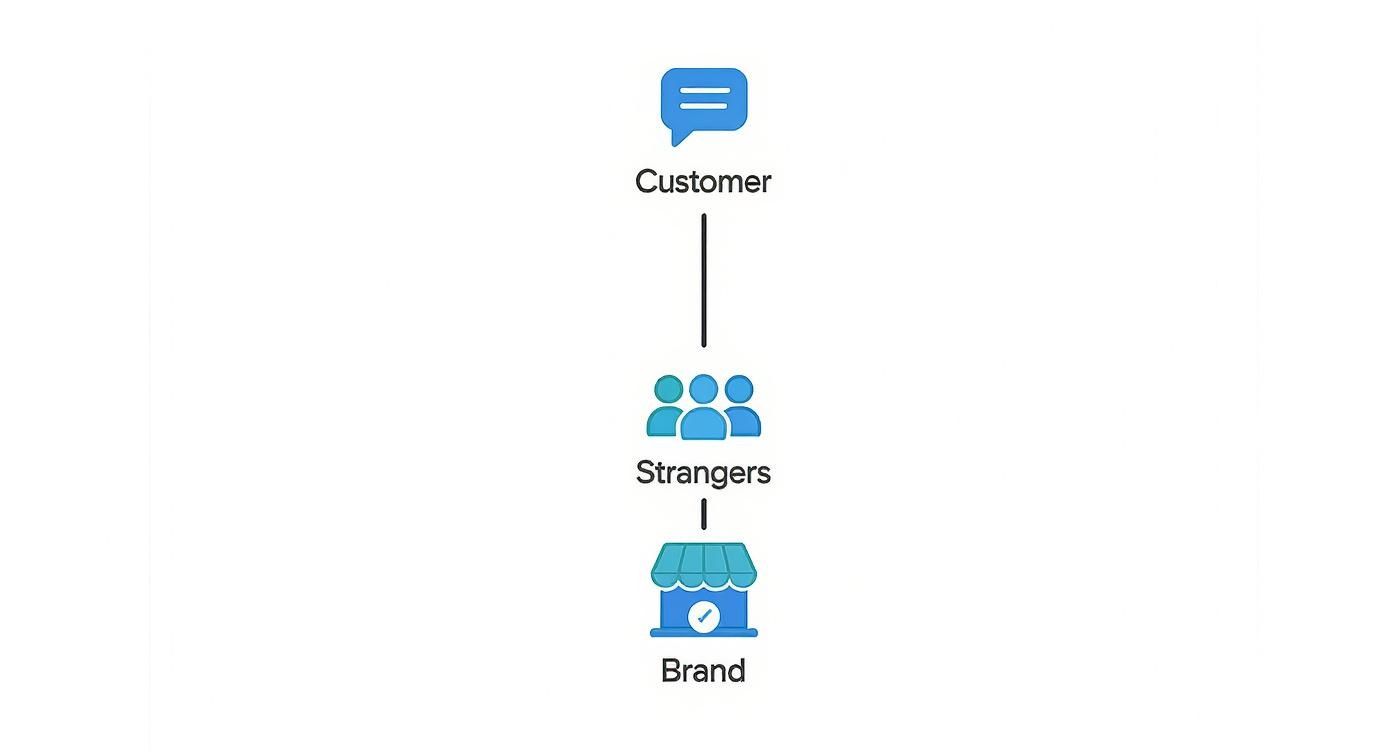
The magic here is that a stranger’s authentic experience often carries more weight than any ad you could ever run.
Pillar 3: Expert and Influencer Endorsements
When a respected voice in your niche—a popular blogger, a trusted influencer, or a major media outlet—gives your product a nod, their credibility instantly becomes your credibility.
An endorsement from a trusted source is a powerful shortcut. It tells shoppers that someone with high standards has already done the research and given their stamp of approval. And you don’t always need a celebrity. A micro-influencer with 5,000 highly engaged followers who truly love your niche can drive more sales than a mega-star with a passive audience.
Pillar 4: Wisdom of the Crowd
This one is all about the power of numbers. It’s built on a simple human instinct: if lots of people are doing something, it must be a good idea. You see this everywhere on successful Shopify stores:
- “Bestseller” badges calling out the most popular products.
- “15 people have this in their cart right now” pop-ups.
- Proudly displaying the total number of happy customers you’ve served.
These little nudges create a powerful sense of FOMO (fear of missing out) and reassure shoppers they’re making a popular—and therefore safe—choice. Knowing how to sprinkle these elements throughout your site is a core part of effective Shopify product page customization.
Pillar 5: Certifications and Badges
Think of these as visual shortcuts to trust. Official seals, industry awards, and security badges instantly communicate professionalism and safety.
Things like “As Seen In” logos from major publications, awards you’ve won, or secure payment icons from Norton or Shopify Payments ease shopper anxiety about quality and data security without you having to write a single word.
Pillar 6: Social Media Signals
Your social media presence is a living, breathing testament to your brand’s relevance. Your follower count, the likes on your posts, and the comments from your community all tell a story.
When a potential customer discovers your brand and sees thousands of people following you and eagerly engaging with your content, it validates you. It says, “This is a place people want to be.” It makes them want to join the club, too.
Why Customer Reviews Are Your Greatest Sales Asset
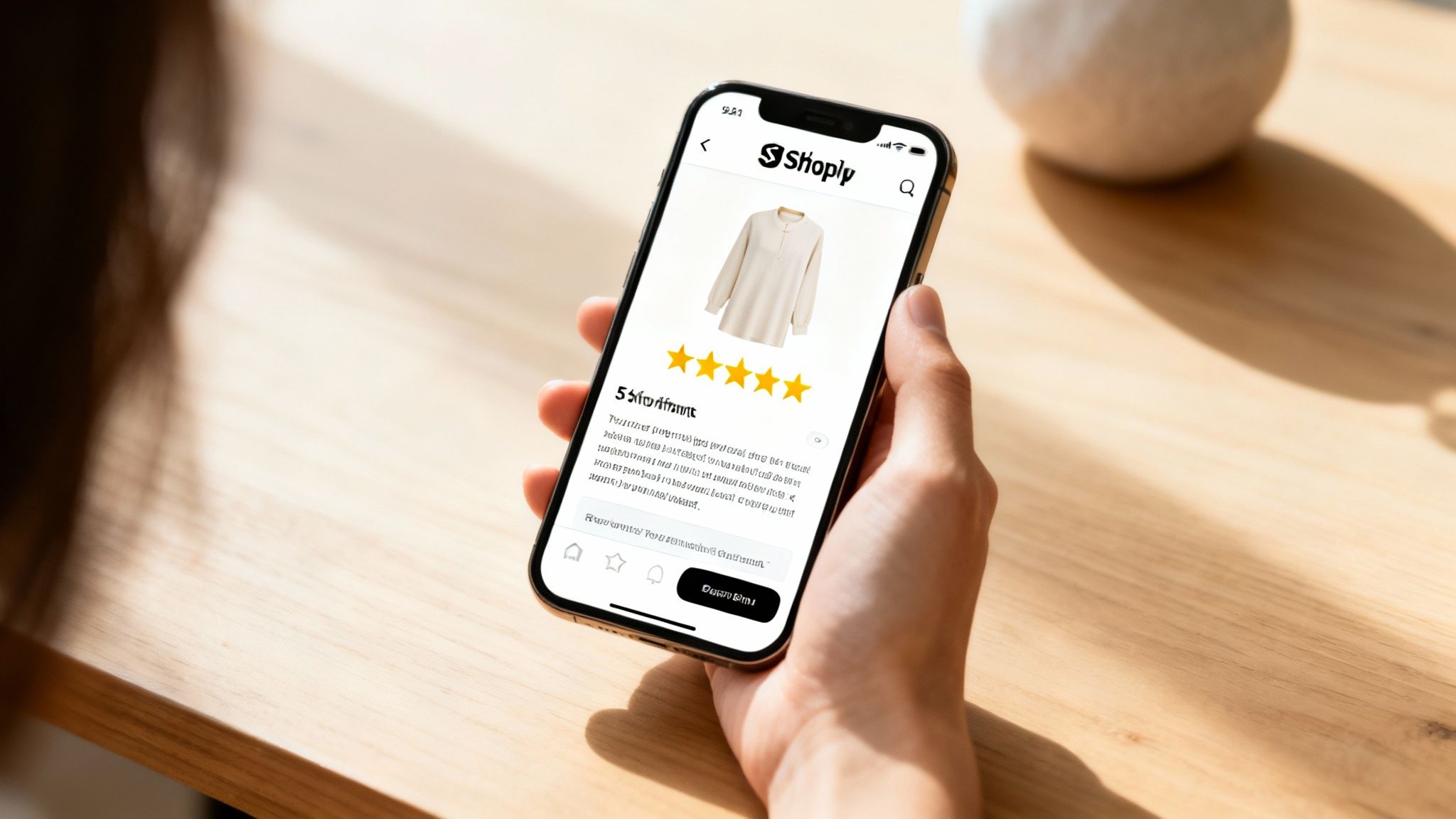
If your marketing social proof strategy has one essential cornerstone, this is it: customer reviews. Think of them as the digital equivalent of a friend leaning in to whisper, “Seriously, you have to try this.”
In a world filled with glossy ads, reviews cut through the noise with unfiltered reality. They’re raw, personal, and answer the one question every shopper has: “But will this actually work for me?”
The numbers don’t lie. Research shows that 93% of consumers say online reviews influence what they buy. Even more telling? A staggering 91% of shoppers aged 18-34 trust them as much as a recommendation from a friend. For Shopify stores, this trust translates directly into sales—displaying reviews can increase conversion rates by as much as 270%.
This is about far more than just chasing five-star ratings. It’s about building a living, breathing library of customer experiences that does the selling for you.
Turning Feedback into Fuel
So, how do you get more of these incredible reviews without sounding needy? The secret is to weave the request into the natural flow of the customer’s journey. You’re not begging for feedback; you’re inviting them to share their story.
Here’s how to do it:
- Automate a Gentle Nudge: Set up a simple email to go out a week or two after the product arrives. Keep the tone friendly, personal, and low-pressure.
- Make It Effortless: The link in your email should take them directly to the review form for the product they bought. The fewer clicks, the better.
- Offer a Small Thank You: A small discount on a future purchase isn’t a bribe. It’s a genuine gesture of appreciation for their time and insight.
The goal isn’t just to collect a review—it’s to show your customers you’re still listening long after they’ve checked out. That’s how you build the kind of loyalty that turns one-time buyers into lifelong fans.
Showcase Your Stories Everywhere
Once you start collecting these powerful stories, don’t hide them. Your reviews deserve to be a star feature across your entire store.
Think about weaving them into key areas like:
- Your Homepage: Feature a rotating carousel of your best, most compelling reviews.
- Product Pages: Place star ratings right under the product title where no one can miss them.
- Marketing Emails: Sprinkle in authentic quotes from happy customers to build confidence.
Going a step further, a well-planned user-generated content (UGC) strategy can take this to the next level, turning satisfied customers into your most powerful brand advocates. While reviews are text-based, UGC provides the visual proof that truly brings those stories to life.
Building Authentic Connections with Influencers

Let’s be honest, the term “influencer marketing” can make us cringe. It often brings to mind celebrities holding products they’ve clearly never touched. But that old, transactional approach is dead. In 2025, the game is all about building real, authentic connections.
This is incredible news for Shopify merchants. You don’t need a Hollywood-sized budget to create powerful marketing social proof. All you need is to find the right people—creators whose audiences hang on their every word—and build a genuine partnership.
Think of it as borrowed trust. When a creator your target customer already admires vouches for your product, their credibility becomes your credibility. It’s the modern-day version of a friend’s glowing recommendation, just delivered to thousands of people at once.
From Big Names to Niche Voices
Here’s a secret: the most powerful partnerships are often with creators you might have overlooked. A mega-influencer might offer massive reach, but a micro-influencer with a smaller, hyper-engaged community has something far more potent: genuine influence.
Consider the difference:
- The Old Way: Paying for a single, sterile photo from a celebrity with millions of disengaged followers that just screams “ad.”
- The New Way: Collaborating with a creator who has 5,000 die-hard fans who trust their recommendations implicitly because they are a true authority in your niche.
That second scenario is where the real connection happens. A creator who is genuinely excited about your product won’t just create an ad; they’ll create a story. Their endorsement feels earned and personal, which is why it hits home with their audience and builds unshakable trust for your brand.
The right influencer doesn’t just put your product in front of people; they give their audience a reason to care.
Structuring a True Partnership
A great collaboration feels less like a contract and more like a conversation. The goal is to create a relationship where the creator is a valued partner, not just a paid spokesperson.
Here’s a simple way to get started:
- Lead with Value, Not an Ask: Don’t just slide into their DMs with a pitch. Engage with their content first. Show them you genuinely appreciate what they do.
- Make Your Pitch Personal: When you do reach out, explain why you think your product is a perfect match for their specific audience. Make it clear you’ve done your homework.
- Give Creative Freedom: You’re the expert on your product, but they are the expert on their audience. Trust them to know what will connect.
The creator economy is a massive force for a reason. The influencer marketing market ballooned to $24 billion as brands everywhere woke up to its power. These partnerships work because 49% of people purchase something at least once a month after seeing an influencer post about it. And a creator’s honest testimonial can boost brand trust by up to 30%, according to recent social proof statistics.
Your Quick-Start Social Proof Playbook

Theory is great, but you’re here for results. You need clear steps you can take today to start building that critical trust. This playbook is designed for exactly that.
Here are three high-impact plays you can run on your Shopify store right now to amplify your marketing social proof.
Play 1: Supercharge Your Product Pages
Your product page is the final handshake before a sale. It’s where you need to melt away any last-minute hesitation.
First, make your best reviews impossible to ignore. Instead of burying them at the bottom, pull a powerful quote from a five-star review and feature it right under your product title. Then, bring your product to life by adding a gallery of user-generated photos showing it in the real world.
- Action Step: Use a Shopify app to feature a “Top Review” snippet right next to your “Add to Cart” button.
- Action Step: Create a dedicated “From Our Community” photo section using a UGC app.
Play 2: Create Smart Scarcity and Urgency
There’s nothing that motivates a shopper quite like seeing that other people want what they’re looking at. This “wisdom of the crowd” effect creates a gentle nudge of urgency and FOMO, encouraging them to take action.
You can tap into this by using subtle, real-time notifications. The goal isn’t to be pushy; it’s to make your store feel vibrant and alive.
When a shopper sees that “12 people have viewed this in the last hour,” it instantly validates their own interest. It can shift their thinking from, “Should I buy this?” to, “I’d better get this before it’s gone.”
Tools like Icona make this incredibly simple. You can add small, non-intrusive popups showing how many people are viewing an item, recent purchases, or low-stock alerts. It’s a nearly effortless way to create a natural buzz and make the shopping experience feel more dynamic and communal.
Play 3: Launch a Simple UGC Outreach Campaign
Authentic user-generated content is pure gold, but you don’t have to just wait for it to appear. You can get the ball rolling with a simple outreach campaign.
Start by identifying customers who recently left a positive review. They’re already happy fans.
- Craft a Personal Email: Send a short, friendly message thanking them for their purchase and kind words. Keep it human.
- Make a Simple Ask: Invite them to share a photo or video of their new product in action on social media.
- Create a Unique Hashtag: Give them a branded hashtag to use (like #MyBrandStyle) so you can easily find the content.
- Offer a Small Reward: A 15% discount on their next order is a fantastic way to show your appreciation.
This approach feels like a personal request, not a corporate marketing blast. For seasonal pushes, explore specialized seasonal review-building strategies for social proof to tailor your outreach. And to make gathering feedback even easier, learn how to create effective customer feedback forms that get you the insights you need.
The biggest mistake you can make? Fake reviews. It’s tempting, but shoppers today have a finely tuned radar for inauthentic praise. The fallout isn’t just a lost sale; it can make your entire brand feel dishonest, and that’s a reputation that’s incredibly hard to repair.
Another common misstep is doing too much, too fast. Bombarding a visitor with popups announcing every single sale or view creates digital noise and a sense of desperation, not excitement.
How to Keep Your Social Proof Genuine
The goal is real confidence, not a temporary buzz. Here are a few other pitfalls to watch out for:
- Using Generic UGC: Curate images and videos that genuinely showcase your product’s quality and align with your brand aesthetic. A blurry, poorly lit photo can make your product look cheap.
- Featuring Outdated Testimonials: A great review from three years ago has lost its power. Prioritize fresh, recent feedback to show customers your quality is consistent and people are loving your products right now.
Think of your marketing social proof as an honest conversation with your community. The moment it feels like a high-pressure sales tactic, you’ve lost the plot. Your authenticity is your most valuable asset—guard it fiercely.
Answering Your Top Questions About Social Proof
It’s normal to have questions. Let’s tackle some of the most common ones we hear from sharp Shopify merchants like you.
How Do I Get My First Customer Reviews?
This is the classic chicken-and-egg problem. The solution is simple: start by sending a friendly, automated email about a week after a customer’s package arrives.
The secret is to make it effortless. Ditch the corporate jargon, keep the tone personal, and link them directly to the product review page. A small “thank you” discount on their next purchase is a fantastic touch—it shows you value their opinion.
Is UGC Better Than Influencer Content?
That’s like asking if a hammer is better than a screwdriver. You need both.
- User-Generated Content (UGC) is your authenticity powerhouse. It comes from real people, answering the crucial question, “Will this work for someone like me?”
- Influencer Content is your discovery engine. It provides aspiration and reach, putting your brand in front of a larger, relevant audience that might not have found you otherwise.
Use influencer content to grab attention, then lean on UGC on your product pages to build that final layer of trust and close the deal.
Can Social Proof Ever Hurt My Sales?
Absolutely. If it feels forced, fake, or is managed poorly, it can backfire spectacularly. A product page with only a couple of scathing one-star reviews is a clear red flag.
The same goes for bombarding visitors with too many pop-ups—it shatters trust instantly. The antidote is transparency. Don’t be afraid of a critical review. Responding to it publicly and professionally shows everyone you’re a brand that listens and cares, which can actually build more credibility in the long run.
Ready to turn your store’s natural buzz into your most powerful sales tool? With Icona, you can add smart social proof notifications, low-stock alerts, and recent sales popups in just a few clicks—no code required. Start building trust and boosting conversions today.