

Ever found the perfect shirt online, added it to your cart, then just… closed the tab? We’ve all been there. A tiny flicker of doubt creeps in—”Will this actually look good on me?”—and the sale is lost forever. That moment of hesitation is the silent killer of conversions for apparel brands.
For years, we’ve tried to patch this problem with size charts and generous return policies. But let’s be honest, those are just bandages. What if we could solve the root cause? What if we could give shoppers the one thing they truly crave: total, unshakable confidence?
In 2025, that’s not just a dream—it’s the new reality. A new wave of AI is transforming the cold, one-size-fits-all product page into a warm, personal styling session. This guide isn’t about chasing trends; it’s about a fundamental shift in how we build trust and how to increase online sales by making online shopping feel more human.
Your Product Page Is a Conversation, Not a Catalog
Think of your product page as the final conversation before a customer commits. For too long, it’s been a monologue. We talk at shoppers with specs and photos, but we don’t talk with them. It’s time to rewrite that script.
The goal isn’t just to display a product. It’s to build unshakable confidence. You want to transform that page from a simple description into a dynamic experience that makes the shopper feel seen, understood, and absolutely certain about their choice. When you pull that off, you’re not just selling clothes; you’re selling a feeling of security.
This is how you increase your sales in a way that feels genuinely helpful, not pushy. You’re guiding your customer from doubt to trust, which is the most natural path to a sale.
This simple visual breaks down that journey from a shopper’s uncertainty to a confident purchase.

It’s clear that closing that gap between doubt and trust is where the magic happens—and where the sale is won.
Go Beyond the Standard Photo Gallery
High-quality photos are the bare minimum. They’re table stakes. But for 2025, they don’t solve the biggest hurdle in online apparel shopping—that nagging “how will it fit me?” question. A stunning photo on a size 4 model doesn’t tell a 5’9″ shopper much about how that dress will look on her. This is where you can build a massive competitive advantage.
The real breakthrough happens when you let the customer see themselves in the picture.
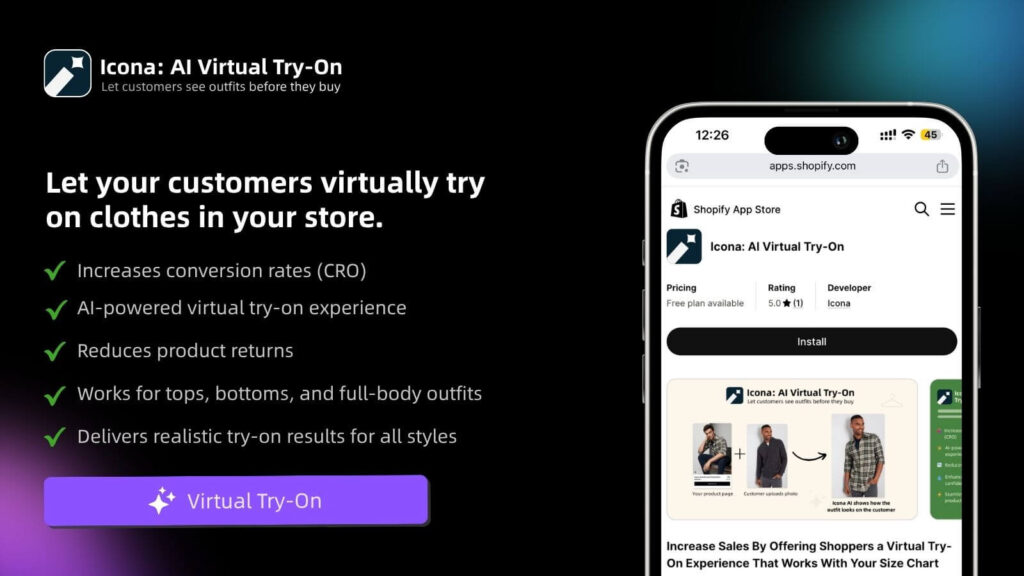
A virtual fitting room isn’t some far-off concept anymore; it’s a practical and incredibly powerful tool for any Shopify store. By integrating a solution like TryIcona, you add a simple button right on your product page that lets shoppers upload a photo and see the garment on their own body.
This is so much more than a gimmick. It’s a direct answer to their biggest unspoken question: “But will it look good on me?”
When you remove that one piece of uncertainty, you’re not just tweaking a product page—you’re fundamentally changing the psychology of the purchase. Doubt evaporates, replaced by confidence and genuine excitement.
Weave a Story Around Every Product
Your product descriptions are another area begging for a makeover. So often, they’re just a dry list of materials. Instead, think of each description as a mini-story waiting to be told.
Where is this piece meant to be worn? What feeling does it evoke? Is it the perfect flowy dress for a warm summer evening, or a structured blazer that commands respect? Use sensory language that helps the shopper imagine the feel of the fabric and the way it moves.
Here’s a quick framework for bringing your descriptions to life:
- Set the Scene: Start with an image. “Picture yourself walking along the beach at sunset in this…”
- Describe the Feeling: Tap into emotion. “…lightweight linen that feels cool and soft against your skin.”
- Explain the Fit: Talk about how it drapes. “…a relaxed silhouette that offers an effortless, flowing elegance.”
- Highlight the Details: Point out what makes it special. “…finished with mother-of-pearl buttons for a subtle touch of luxury.”
This approach forges an emotional connection, making the product more than just an object—it becomes part of an experience they can’t wait to have.
Show, Don’t Just Tell, With Social Proof
Seeing your product on a real person who isn’t a professional model is unbelievably powerful. It provides a relatable, authentic context that a studio photoshoot just can’t capture. Sprinkling user-generated content (UGC) throughout your product pages can give your credibility a massive boost.
Get your customers involved! Encourage them to share photos by offering a small discount on their next purchase or by featuring them on your brand’s social media. There are great tools that can automatically pull in Instagram photos with a specific hashtag and display them in a beautiful gallery right on your product page.
This social proof acts as a powerful, collective testimonial, showing potential buyers that people just like them are already loving your products.
Ensure Every Shopper Feels Represented
One of the biggest missed opportunities for apparel brands is failing to show products on a diverse range of body types. When a shopper browses your site and doesn’t see anyone who looks like them, it sends an unintentional but clear message: “This product isn’t for you.”
Of course, hiring models to showcase every single product variant—across different sizes and colors—is often financially out of reach for growing brands. This is where AI-generated model imagery becomes an absolute game-changer.
Tools like Icona Studio let you generate hyper-realistic model images for your entire catalog at a tiny fraction of the cost of a traditional photoshoot. You can showcase a single dress on a dozen different models, representing a true spectrum of your actual customer base.
This isn’t just about being inclusive; it’s smart business. When customers see themselves reflected in your brand, they feel an immediate connection and are far more likely to buy. For more ideas on transforming your product displays, check out our deep dive on Shopify product page customization.
Your product page is your digital storefront. Making it a place of confidence, inspiration, and true representation is the key to unlocking real, sustainable growth.
How to Increase Online Sales by Attracting Shoppers Who Are Ready to Buy
Pouring money into ads without first plugging the leaks in your store is like trying to fill a bucket with holes. You can get thousands of clicks, but if they aren’t the right clicks, your budget just evaporates. The secret isn’t just getting more traffic—it’s attracting shoppers who show up with a mission to buy.
These are the people who have already done their homework. They know what they’re looking for and are just searching for the one brand that gives them the confidence to finally hit “Add to Cart.” Your job is to be that brand.
To pull this off, you need a smart strategy that marries the quick wins from paid ads with the long-term, compounding power of organic growth.
Speak Their Language on Social Media
For apparel brands, Instagram and TikTok aren’t just marketing channels; they’re your digital storefronts. But let’s be real, nobody scrolls through their feed hoping to see a sales pitch. They’re looking for inspiration, entertainment, and connection.
So, stop thinking like a brand and start acting like a trusted friend dishing out style advice.
Instead of another sterile product shot, why not post a quick Reel showing three different ways to style one of your dresses? Find micro-influencers who genuinely vibe with your brand and have them do an authentic try-on haul. Use Instagram Stories to ask your audience which new colorway they’d rather see.
This approach accomplishes two huge things:
- It builds a community: You’re starting a conversation, not just broadcasting a message.
- It pre-qualifies your traffic: When someone clicks over from a styling video they loved, they land on your site already inspired and excited.
Master the Art of Search Intent
While social media is great for discovery, search engines are where you capture shoppers who are actively hunting for what you sell. Mastering SEO is one of the most powerful things you can do because it brings you customers who are already halfway to the checkout.
Forget about broad, hyper-competitive keywords like “women’s dresses.” The real gold is in long-tail keywords—those specific, multi-word phrases that reveal exactly what a shopper is thinking.
Just look at the difference in intent:
- Broad keyword: “jeans” (Is the user just browsing? Looking for pictures? Researching styles?)
- Long-tail keyword: “best petite-friendly wide-leg jeans for summer” (This person knows exactly what they want and is probably ready to buy it today.)
Your blog content should be built entirely around answering these specific questions. Write articles like “The Ultimate Guide to Finding Linen Sundresses for Humid Weather” or “5 Ways to Style Wide-Leg Jeans for a Petite Frame.” Each post becomes a tiny magnet, pulling in super-qualified traffic for months and years to come.
Winning at SEO these days isn’t about gaming the system. It’s about being the most helpful, authoritative answer to a customer’s very specific question.
Blend Paid and Organic for Maximum Impact
Think of it this way: your organic efforts build a rock-solid foundation, while paid ads give you a targeted, immediate boost. An improved PPC campaign setup for increased traffic and sales can be a game-changer, especially when it targets users with clear buying signals.
Use your paid social ads to retarget visitors who have already seen your organic content. For example, if someone read your blog post on linen dresses, you can serve them an ad showcasing your brand-new linen collection. This synergy is incredibly powerful because it builds familiarity and reinforces your value.
Build an Email List That Feels Like a VIP Club
Finally, your email list is your single most valuable asset. It’s the one channel you actually own, completely immune to algorithm whims. But getting that email address is harder than ever. A tired “Join our newsletter” popup just doesn’t cut it.
You need to make your email list feel like an exclusive community.
Offer something genuinely valuable in exchange for their inbox access. Instead of just a 10% discount, promise early access to new collections, a downloadable seasonal style guide, or entry into a members-only giveaway. You’re not just asking them to subscribe; you’re inviting them to become an insider.
When you get this right, every email you send is a welcome arrival, not an interruption, driving your most loyal customers back to your store, excited to see what’s new.
Turn First-Time Buyers Into Lifelong Brand Advocates
It’s so easy to pour all our energy into landing that first sale. But the moment a customer clicks “buy” isn’t the finish line. It’s the starting gun for the most important race you’ll run—the race for their loyalty.
Real, lasting growth isn’t built on one-off transactions. It’s built on the second, third, and tenth purchase from a customer who has fallen in love with your brand.
The post-purchase experience is your single greatest opportunity to turn a curious buyer into a true fan. This is where you graduate from a simple transaction to a genuine connection. It’s your chance to deliver a moment of pure delight they’ll be thinking about long after the package lands on their doorstep.
Redesign Your Post-Purchase Communication
Think about the usual stream of emails a customer gets. “Order Confirmed.” “Your Order Has Shipped.” It’s functional, but it’s also cold and totally forgettable. This is prime real estate to inject your brand’s personality and show your customers you actually care.
So, let’s flip the script. Your post-purchase emails should build anticipation, not just relay logistics.
- The “Thank You” Email: Don’t just send a receipt. Share a heartfelt message from the founder. Maybe include a quick styling tip for the item they just bought. It’s a small touch that transforms a sterile confirmation into a warm welcome.
- The “Shipped” Notification: This is your chance to really build the excitement. Instead of only a tracking number, why not embed a link to a curated Spotify playlist that captures your brand’s vibe?
- The Follow-Up: A week after the item arrives, send a friendly check-in. But don’t just beg for a review. Genuinely ask them how they’re enjoying their new piece. This shows you care about their experience, not just their data.
The moments right after a sale are when a customer is most emotionally invested in you. Don’t let that precious window be filled with generic, automated messages. Make it personal. Make it memorable.
Turn Returns into a Retention Superpower
For most apparel brands, returns feel like a painful cost of doing business. But what if we saw them differently? A smooth, stress-free return process can actually make a customer more loyal. When you make it easy, you’re telling them you trust them.
Of course, the real goal is to stop returns before they even happen. This is where getting the pre-purchase experience right has a massive impact on your post-purchase world. When you use tools like a virtual try-on, you give shoppers the confidence they need to pick the perfect size from the get-go.
This has an incredible ripple effect. Did you know that up to 40% of all online clothing returns are simply because of fit issues? When you drastically cut that number down, you’re not just saving money on shipping. You’re freeing up your team’s time and energy.
Instead of processing returns, your team can focus on creating “wow” moments that build loyalty—writing personalized thank-you notes, engaging with customers on social media, or building out a killer VIP program. By solving the fit problem upfront, you’re not just improving conversions; you’re funding a richer, long-term customer experience.
Build a Community, Not Just a Customer List
The final piece of the loyalty puzzle is creating a true sense of belonging. People want to buy from brands they feel connected to. Your job is to build a space where your customers feel like insiders, not just shoppers.
This is where your brand’s unique personality can really shine.
Maybe you create a private Facebook group for your most dedicated fans. Give them early access to new collections, ask for their honest feedback on upcoming designs, and feature their photos on your main social channels.
Think about a brand like Glossier. They built an empire by making their customers feel like they were part of an exclusive club, co-creating the brand right alongside them. This is how you build a loyal base of advocates who don’t just wear your clothes, they live your brand.
When you invest in this post-purchase journey, you stop chasing every new lead and start cultivating a thriving ecosystem of repeat buyers. That’s not just good business—it’s how iconic brands are born.
Use Customer Behavior Data to Make Smarter Decisions
Gut feelings are great for starting a business, but data is what builds an empire. For a long time, “analytics” felt like a chore—a messy dashboard of charts that never quite connected to real-world growth. But what if we started looking at data not as a report card, but as a treasure map leading directly to what our customers truly want?
The real magic happens when you uncover the “why” behind every click, every moment of hesitation, and every final purchase. This is how you build an intelligent growth engine. It’s about creating a powerful feedback loop where customer behavior continuously sharpens your products and fine-tunes your marketing.
Pinpoint the Metrics That Truly Matter
It’s easy to get lost in a sea of numbers. To make smart decisions, you have to cut through the noise and focus on the signals that have a real impact on your bottom line. Forget vanity metrics and zero in on the data that tells you the story of your business’s health.
I’ve seen so many brands obsess over traffic numbers but ignore what that traffic actually does. Let’s focus on what actually moves the needle.
- Conversion Rate by Traffic Source: This shows you which channels are bringing in shoppers who are genuinely ready to buy. If your Instagram traffic converts at 4% while your Google Ads traffic is stuck at 1%, you know exactly where to double down.
- Customer Lifetime Value (CLV): This is the holy grail. It’s the total amount a customer is expected to spend with you over their entire relationship with your brand. A high CLV is proof that you’re building a loyal community.
- Average Order Value (AOV): How much do people typically spend in one go? Even small increases here, often sparked by smart upselling or bundling, can have a massive impact on your revenue.
- Product Return Rate: For any apparel store, this is a critical health metric. A high return rate almost always points directly to problems with fit, confusing product descriptions, or inaccurate photography.
Your analytics dashboard isn’t just for looking back at what happened. It’s for looking forward and predicting what your customers will want next.
To make this even clearer, let’s break down the most important metrics and how to act on them.
Key Metrics for Boosting Online Sales
A solid grasp of your key metrics is the foundation of smart, scalable growth. Here’s a quick-glance table to help you focus on what’s important and what to do about it.
| Metric | What It Measures | Actionable Tip to Improve |
|---|---|---|
| Conversion Rate | The percentage of visitors who make a purchase. | Enhance product pages with high-quality images, virtual try-on, and clear calls-to-action. |
| Average Order Value (AOV) | The average amount spent per order. | Implement “complete the look” suggestions or offer a small discount on bundled items. |
| Customer Lifetime Value (CLV) | The total revenue a single customer generates over time. | Create a loyalty program that rewards repeat purchases and engages customers between orders. |
| Product Return Rate | The percentage of sold items that are returned. | Use a virtual try-on tool like TryIcona to drastically reduce fit-related returns and improve sizing guides. |
| Cart Abandonment Rate | The percentage of shoppers who add items to their cart but don’t complete the purchase. | Simplify your checkout process to a single page and offer guest checkout options. |
By consistently monitoring these five areas, you’ll always have a clear picture of your store’s health and know exactly where to direct your energy for the biggest impact.
Explore the New Frontier of Behavioral Data
Beyond these standard metrics, amazing new tools are giving us a much deeper look into shopper behavior before the sale even happens. This is where we shift from being reactive to truly proactive.
Think about the incredible insights hiding within a virtual try-on experience. With a tool like TryIcona, you’re not just offering a cool feature; you’re collecting invaluable data. Its analytics dashboard can reveal which styles are most “tried on,” even if they aren’t your bestsellers yet. This is a powerful leading indicator of future trends.
Imagine this: you discover a specific jacket is being virtually tried on 500 times a week but has a strangely low conversion rate. That’s not a failed product—it’s a massive signal. Digging a little deeper, you might find that shoppers consistently hesitate after seeing the sleeve length. This isn’t just a customer service issue; it’s pure gold for your product development team.
This new layer of data helps you answer business-critical questions:
- Which of our new designs are really catching our audience’s eye?
- Are there common fit issues we need to fix in our next collection?
- Do certain colors get way more virtual try-ons, suggesting a new marketing angle?
This is the future of data-driven fashion. It’s about using technology to finally understand the unspoken needs of your customers. By closing the loop between what shoppers do and how you design your next product, you create a brand that feels like it’s always one step ahead.
Your Top Questions About Growing Online Sales, Answered
If you have questions about growing your store, you’re on the right track. It means you’re looking past today and thinking strategically about what it takes to win tomorrow. Let’s dive into some of the most common questions I hear from Shopify apparel store owners.
Think of this as a quick, candid chat—no fluff, just straight talk.
How can I get more sales on my Shopify store, fast?
When you need a quick sales injection, the smartest play isn’t always more traffic. It’s about getting more from the traffic you already have. You need to focus intensely on your conversion rate.
Here are a few things you can do this week:
- Create real urgency. Don’t just say “sale.” Launch a flash sale with a very clear deadline. Adding a countdown timer to your product pages works wonders.
- Show off your social proof. Pull up your best-selling product pages and make sure the photo reviews from happy customers are front and center.
- Go after abandoned carts. Your cart abandonment email flow should be working hard for you. A simple, friendly reminder—maybe with a small “complete your order” discount—is often all it takes.
These are short-term boosts, not a long-term strategy, but they are incredibly effective for a quick win.
What’s the single most important thing for increasing online sales?
If I had to pick just one thing for success in 2025, it’s customer confidence. End of story.
Every single part of your store experience needs to answer one silent question from your customer: “Can I trust this brand and will this product actually work for me?” When a shopper trusts your brand, believes the item will fit them perfectly, and feels secure in their decision, the sale feels almost inevitable.
Every single thing you do—from your product descriptions to your return policy—is either building or eroding that confidence. It’s the bedrock of every sale you make.
How exactly does virtual try-on lead to more sales?
This is a great question because it gets right to the heart of turning tech into revenue. Virtual try-on directly demolishes the #1 reason people don’t buy clothes online: fit uncertainty. It’s that nagging doubt that kills millions of sales right at the finish line.
When you let someone see how a dress will actually look on their specific body, you erase that doubt in an instant. This creates massive purchase confidence. Shoppers become far more certain about their choice, which translates directly into higher conversion rates. The formula is simple but powerful: more confidence = more sales.
Even better, it protects the sales you’ve already made. When customers get the right fit the first time, your return rates drop significantly. This doesn’t just save you money; it creates happier customers who come back to buy again.
For a deeper dive into this and other tactics, check out this fantastic guide on proven strategies to increase online sales.
Ready to turn shopper doubt into confidence and sales? TryIcona adds a virtual fitting room to your Shopify store in minutes, letting customers see themselves in your clothes. Start converting more visitors and reducing returns today. Get started for free on tryicona.com.