
Selling clothes online is about more than just listing a product; it’s about creating a an experience that builds trust and turns shoppers into lifelong fans. To succeed in 2024, you need to master your brand story, create stunning product visuals, and solve the critical “fit” problem before it leads to costly returns. This guide provides actionable tips for selling clothes online, designed to help you build a profitable fashion brand on platforms like Shopify.
1. Build a Brand That Connects and Converts

Before you list a single product, the first step is to build a solid brand foundation. A brand is more than a logo; it’s the story, the values, and the promise you make to your customers. In a crowded market, a strong brand identity is what makes you memorable and earns the trust that converts casual browsers into loyal advocates.
The opportunity is massive. The global ecommerce apparel market is projected to grow from $714.3 billion to $779.3 billion. In the United States alone, online fashion sales have already hit $238 billion, accounting for roughly 20% of all national online shopping. You can dive deeper into these online clothing sales statistics to see just how big the potential is.
Tip 1: Define Your Niche and Ideal Customer
You can’t be everything to everyone. The most successful brands serve a specific audience with a unique point of view. Trying to appeal to the masses often results in appealing to no one.
Here’s how to do it:
- Create a Customer Persona: Go beyond basic demographics. What do they binge-watch? What causes do they support? Where do they get style inspiration? Build a detailed profile of your ideal customer. For example, “Sarah, 28, a graphic designer who values sustainability and minimalist aesthetics.”
- Identify a Problem to Solve: Are you offering inclusive sizing for an underserved market? Creating affordable, high-quality workwear? Specializing in sustainable fashion? Your brand should have a clear purpose.
- Establish a Unique Style: Is your brand’s vibe minimalist and clean, bohemian and free-spirited, or bold and retro? This aesthetic should inform every decision you make.
Example: Instead of a generic “women’s dress shop,” a stronger niche is “sustainably-made linen dresses for eco-conscious minimalists aged 25-40.” This clarity makes product design, marketing, and content creation infinitely easier.
Tip 2: Choose Your Platform and Set Up Shop
Your ecommerce platform is your digital storefront. While marketplaces like Etsy or Depop can be good starting points, building your brand on a dedicated platform like Shopify offers complete control and better profit margins.
How to get started on Shopify:
- Sign up and choose a plan. Shopify’s plans scale with your business.
- Select a theme that aligns with your brand’s aesthetic. A clean, professional look is non-negotiable for building trust.
- Customize your storefront. Upload your logo, establish a color palette, and create a simple, intuitive navigation menu (e.g., Home, Shop All, Dresses, Tops, About Us, Contact).
Actionable Takeaway: A professional and easy-to-navigate website is a fundamental signal of trustworthiness. Shoppers are far more likely to buy from a store that looks credible and functions flawlessly.
Tip 3: Source Quality Apparel and Handle Logistics
Your products are the core of your brand. Whether you’re designing from scratch, curating vintage finds, or using a print-on-demand service, quality is paramount. Your apparel must live up to the brand promise you’re making.
Here’s your business setup checklist:
- Choose a Business Structure: Register your business as a sole proprietorship, LLC, or other entity. This protects you legally and is required for opening a business bank account.
- Open a Business Bank Account: Keep your business and personal finances separate from day one to simplify accounting and tax preparation.
- Develop a Shipping Strategy: Decide on your shipping rates. Will you offer a flat rate, free shipping over a certain threshold (e.g., free shipping on orders over $75), or real-time carrier rates? Have your packaging materials ready before your first order arrives.
Getting these foundational pieces right from the start will set you up for smoother operations and long-term success.
Your Online Store Launch Checklist
| Element | Key Action | Why It Matters |
|---|---|---|
| Brand Identity | Finalize your logo, color palette, and brand voice. | Creates a memorable and consistent experience for your customers. |
| Niche & Audience | Clearly define who you are selling to and why they should choose you. | Guides all product, marketing, and content decisions for maximum impact. |
| eCommerce Platform | Set up your Shopify store, choose a theme, and configure settings. | Provides a reliable, professional, and scalable foundation for your business. |
| Product Sourcing | Secure your inventory or set up your print-on-demand/dropship partners. | Ensures you have high-quality products ready to sell and fulfill. |
| Business Logistics | Register your business, open a bank account, and plan your shipping. | Establishes a proper legal and financial structure for smooth operations. |
Think of this table as your pre-flight check. Ensuring each of these elements is in place means you’re not just launching a store; you’re launching a business ready to thrive.
2. Turn Your Product Pages into Virtual Showrooms
Your product page is your digital sales floor, fitting room, and top salesperson combined. Since customers can’t physically touch the fabric or try on the clothes, your page must work exceptionally hard to build desire and trust.
Many stores fail here with basic photos and uninspired descriptions. We’re going to elevate your approach. Here’s how to transform your product pages into immersive experiences that give shoppers the confidence to click “Add to Cart.”
Tip 4: Master Your Product Photography
Your photos are the single most important element on your product page. Poor photography can make a beautiful garment look cheap, while excellent photography can elevate your brand and justify a premium price.
You don’t need a massive budget, just attention to detail.
- Lighting is Everything: Natural light is your best asset. Shoot near a large window on a slightly overcast day for soft, even light that accurately represents color and texture. Avoid harsh, direct sunlight, which creates unflattering shadows.
- Show Every Angle: Leave nothing to the imagination. Provide a comprehensive gallery: front, back, side views, and detailed close-ups. Zoom in on unique buttons, embroidery, fabric texture, or zipper quality.
- Use a Mix of Photo Styles:
- On-Model Shots: Essential for showing fit, drape, and how the garment moves on a real person.
- Flat Lays: A cleanly styled flat lay on a neutral background is perfect for showcasing a garment’s silhouette and design details.
- Lifestyle Photos: Show your products in real-world settings. A photo of your sundress at a picnic helps customers emotionally connect and envision the items in their own lives.
Tip 5: Write Descriptions That Actually Sell
While photos grab attention, your product description seals the deal. This is your chance to tell a story and connect with your customer. A great description makes the product feel tangible and irresistible.
A compelling product description doesn’t just list features; it sells a feeling. It helps the shopper imagine themselves wearing the item, feeling confident and stylish. It’s the difference between “cotton t-shirt” and “an effortlessly cool, buttery-soft cotton tee that will become your new weekend staple.”
How to do it:
- Use Bullet Points for Scannability: List key details like fabric composition (e.g., 100% Organic Cotton), fit notes (“Runs true to size,” “Designed for a relaxed fit”), and care instructions.
- Write a Narrative Paragraph: Alongside the specs, write a short story. Describe the feel of the fabric, suggest styling options (“Pair it with your favorite vintage jeans for a classic look”), and tap into the lifestyle your brand represents.
For a masterclass in how top-tier brands do this, take a look at our deep dive into Shopify product page customization.
Tip 6: Leverage AI for Product Imagery
For many new brands, the cost and complexity of a traditional photoshoot is a major roadblock. Finding models, booking photographers, and renting studios adds up quickly. This is where technology is leveling the playing field.
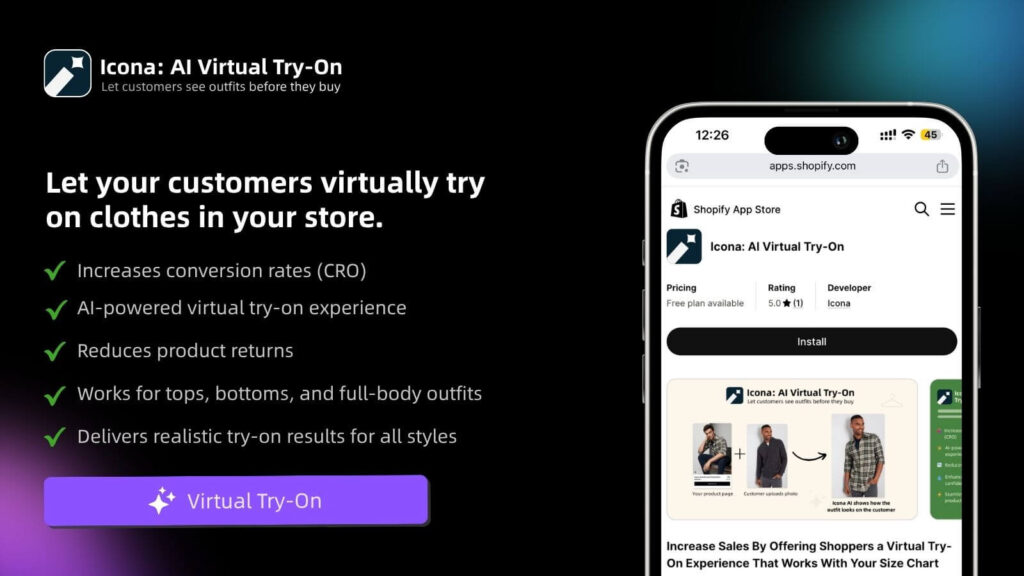
AI-powered tools like Icona are revolutionizing product photography. They allow you to generate hyper-realistic, on-model photos without ever needing a physical photoshoot. You can showcase your collection on a diverse range of models, giving every shopper a better chance of seeing how an item might look on them.
This screenshot shows how an app like Icona can instantly generate on-model imagery, offering a powerful alternative to traditional photography.
This technology empowers any brand, regardless of budget, to create high-quality, diverse, and engaging product visuals. It directly answers the customer’s biggest question: “How will this look on me?” Answering that question effectively not only improves the shopping experience but also builds the trust necessary to drive sales.
3. Solve the Fit Puzzle and Drastically Cut Returns
Returns are the silent profit killer in fashion ecommerce. The number one reason customers return clothing is simple: it didn’t fit as expected. This costs you money in shipping and restocking, consumes your time, and erodes customer trust.
Tackling the fit puzzle head-on is one of the most impactful things you can do to protect your bottom line and improve the shopping experience.
When you remove the guesswork from sizing, you create a confident path from discovery to purchase.
Tip 7: Build a Size Chart That Actually Helps
Your first line of defense is a clear, comprehensive, and genuinely helpful size chart. A generic S/M/L chart is no longer sufficient.
How to create an effective size chart:
- Provide Specific Garment Measurements: For each size, list the flat measurements for key areas like chest (pit to pit), waist, hips, inseam, and length.
- Include a “How to Measure” Guide: Use simple diagrams or a short video to show customers how to measure themselves accurately.
- Add International Size Conversions: If you sell globally, include conversions for US, UK, EU, and other relevant sizing systems.
- Write Clear Fit Notes: On each product page, describe the intended fit. For example: “Designed for a relaxed, oversized look” or “Features a slim, body-hugging fit.”
Tip 8: Embrace the Future with Fit Technology
While a great size chart is a good start, modern technology offers a far more powerful solution to the fit problem.
Shopper uncertainty is the biggest conversion killer in online fashion. When a customer can’t visualize how something will look on their body, they are far more likely to abandon their cart. Even worse, they might bracket—buying multiple sizes with every intention of returning most of them.
This is where innovative tools change the game. Modern solutions bridge the gap between the 2D screen and the 3D reality of a fitting room, giving shoppers a personalized preview of how your clothes will actually look and fit them.
Tip 9: Give Shoppers a Virtual Fitting Room
The most direct way to solve the fit puzzle is to let customers “try on” clothes before they buy. This is now an accessible tool for Shopify stores of all sizes.
Platforms like Icona integrate a virtual try-on button directly onto your product pages. A shopper can upload their photo and, in seconds, see a realistic image of how a dress or shirt will look on their unique body shape. This transforms the shopping experience from a guess into a confident decision. You can learn more about how virtual try-on technology is reshaping ecommerce.
The benefits of implementing virtual try-on:
- Lower Return Rates: Customers who know how an item will fit are far less likely to send it back.
- Higher Conversion Rates: Removing doubt is the fastest way to increase completed purchases.
- Increased Customer Loyalty: A brand that helps you find the perfect fit every time is a brand you’ll trust and return to.
Solving the fit puzzle isn’t just about customer service—it’s a core business strategy that protects your profits and builds a more resilient brand.
4. More Pro Tips for Selling Clothes Online
Beyond the fundamentals of branding and product presentation, several other strategies are crucial for building a profitable and growing fashion business.
Tip 10: Price Your Apparel for Profit and Growth
Pricing is a strategic balance. Your price must reflect your brand’s quality, cover all your costs, and leave you with enough profit to reinvest in growth.
How to price your products:
- Calculate Your Cost of Goods Sold (COGS): This is the total cost to get a product into a customer’s hands. It includes the product cost, shipping from the supplier, packaging materials, and payment processing fees (e.g., from Shopify Payments or PayPal). Your price must be higher than your COGS.
- Choose a Pricing Strategy:
- Keystone Pricing: The simplest method. Double your COGS to set the retail price (e.g., if COGS is $15, the price is $30). This ensures a 50% gross margin.
- Competitive Pricing: Research your direct competitors. Price your items in a similar range to remain a viable option for your target customer.
- Value-Based Pricing: Price based on the perceived value. If your product is made from unique, sustainable materials or is a limited-edition design, you can command a higher price.
Actionable Takeaway: Your price tag communicates your brand’s value. A higher price can signal quality and exclusivity, attracting customers looking for special, well-crafted pieces rather than a bargain.
Tip 11: Use Promotions Strategically
Discounts can boost sales, but overuse can devalue your brand.
How to run effective promotions:
- Flash Sales: Create urgency with a short-term sale (e.g., “24-Hour Flash Sale: 25% Off All Dresses”).
- Bundle Offers: Increase your average order value (AOV) with deals like “Buy any two tees, get the third 50% off.”
- VIP Offers: Reward your email subscribers with exclusive discount codes to build loyalty.
5. Go Where Your Customers Are

Having amazing products isn’t enough; you need a smart, multi-channel marketing plan to ensure your ideal customers find you.
Tip 12: Master Visual Social Media
For fashion brands, platforms like Instagram and Pinterest are your digital runway. The goal is to sell a lifestyle, not just a product.
How to do it:
- Go Behind the Scenes: Show your design process or how you pack orders to build a human connection.
- Encourage User-Generated Content (UGC): Create a unique hashtag and feature customer photos on your feed. This is powerful social proof.
- Create Styling Videos: Use Instagram Reels or TikTok to show “3 Ways to Wear Our Blazer” or “Get Ready With Me” videos. This provides inspiration and value.
Tip 13: Build Your Email List
Your email list is your most valuable marketing asset—a direct line to your most engaged customers that you own, free from algorithm changes.
How to do it:
- Personalize Your Campaigns: Segment your list based on past purchases. If a customer bought a dress, send a follow-up email showcasing matching accessories.
- Set Up an Abandoned Cart Flow: A staggering 77.5% of apparel shopping carts are abandoned. A simple, well-timed email reminding customers what they left behind can recover a significant number of sales. You can learn more about online shopping behaviors on capitaloneshopping.com.
Tip 14: Partner with the Right Influencers
Influencer marketing can introduce your brand to new, highly-targeted audiences.
How to do it:
- Focus on Micro-Influencers: An influencer with 10,000 highly engaged followers in your niche is often more effective than a mega-influencer with a million disconnected ones.
- Prioritize Authenticity: Partner with creators whose personal style and values genuinely align with your brand. The collaboration should feel like a natural recommendation, not a forced ad.
Tip 15: Expand Your Reach with Marketplaces
While your Shopify store is your brand’s home, marketplaces like Amazon, Etsy, or eBay can be excellent channels for customer acquisition.
| The Good | The Not-So-Good |
|---|---|
| Instant access to a huge customer base | High commission fees that cut into profit |
| Increased brand visibility and discovery | Less control over branding and the customer experience |
| Built-in trust from a familiar platform | Fierce competition with countless other sellers |
Use marketplaces to introduce new customers to your brand, then drive them to your own site for the best experience. You can even use ecommerce personalization tools to make your Shopify store an unforgettable destination.
6. Your Questions on Selling Clothes Online, Answered
Navigating the world of online fashion can be daunting. Here are clear, practical answers to some of the most common questions from new entrepreneurs.
What Is the Most Profitable Way to Sell Clothes Online?
The most profitable method is selling directly to consumers (DTC) through your own online store on a platform like Shopify. This gives you full control over your branding, pricing, and customer relationships, leading to higher profit margins.
How to maximize profitability:
- Build a Strong Brand Identity: This is what makes customers choose you over competitors.
- Optimize Your Sourcing: Whether you’re manufacturing or dropshipping, keeping your Cost of Goods Sold (COGS) low is essential.
- Focus on Owned Marketing Channels: Invest in email and social media to drive traffic directly to your site, avoiding marketplace fees.
While platforms like Amazon offer a large audience, their fees can significantly reduce your profits. A hybrid strategy often works best: use your DTC store as your primary sales channel and marketplaces for discovery.
How Do I Make My Clothing Stand Out Online?
In a saturated market, you must define your unique selling proposition (USP). This is the one thing your brand does differently or better than anyone else.
How to identify and showcase your USP:
- Find Your “Thing”: Is it your commitment to sustainable materials? An inclusive size range? A perfectly curated niche aesthetic like “dark academia”?
- Show, Don’t Just Tell: Use stunning lifestyle photography that tells a story your ideal customer wants to be part of.
- Craft an Unforgettable Experience: Technology can be a powerful differentiator. Tools like virtual try-on create a helpful and memorable shopping experience that sets you apart from the competition.
What Is the Biggest Challenge When Selling Clothes Online?
The single biggest challenge is overcoming the “sensory gap.” Online, customers can’t feel the fabric, see the true drape, or try on the clothes. This uncertainty leads directly to the two biggest profit killers: high return rates and abandoned carts.
How to bridge the sensory gap:
- Provide Ultra-Detailed Size Charts: Include specific garment measurements and a “how-to-measure” guide.
- Use High-Resolution Imagery: Show every angle and include a zoom feature so shoppers can inspect details.
- Write Descriptive Product Details: Use sensory words. Is the fabric “buttery-soft and drapey” or “structured and crisp”?
- Adopt Fit Technology: This is one of the most effective tips for selling clothes online. A tool like virtual try-on directly addresses fit uncertainty, giving shoppers the visual confirmation they need to buy with confidence.
Key Takeaway and Your Next Step
Building a successful online clothing store in 2024 requires a blend of strong branding, excellent presentation, and smart technology. By focusing on creating a trustworthy brand, crafting immersive product pages, and solving the critical fit puzzle, you can significantly increase conversions, reduce returns, and build a loyal customer base.
Ready to close that sensory gap and give your customers the confidence they need to buy? Icona adds a powerful virtual fitting room and AI-powered model imagery directly to your Shopify store. It’s designed to boost conversions, slash return rates, and create a shopping experience that truly sets your brand apart.