
Are you watching potential sales vanish from your Shopify store every day? It’s a frustratingly common problem. A customer meticulously fills their cart, gets to the final step, and then… radio silence. You’re left staring at a growing list of almost-customers, wondering what went wrong. But what if you could automatically win back a significant chunk of that lost revenue?
That’s where a powerful abandoned cart email strategy transforms your business. These aren’t just simple “you forgot something” nudges; they are your secret weapon for turning hesitation into a confident purchase. A well-crafted email can remind, persuade, and build trust, directly addressing the friction that caused your shopper to pause. It’s one of the highest-leverage activities you can focus on to immediately boost your bottom line.
In this guide, you’ll find 15 proven abandoned cart email examples you can adapt for your store today. You won’t just see pretty pictures; you’ll get the psychology behind why they work and actionable steps to build a recovery sequence that drives sales. We’ll explore everything from crafting the perfect subject line to using advanced personalization, just like how TryIcona’s virtual try-on helps customers visualize products before purchase, eliminating doubt at the source.
Let’s turn those abandoned carts into your next wave of completed orders.
1. The Simple Reminder Email
The Simple Reminder is your foundational first step in any effective abandoned cart sequence. It’s exactly what it sounds like: a clean, direct, and friendly nudge to your customer that they’ve left something behind. This email isn’t about high-pressure tactics or deep discounts; its power lies in its simplicity and perfect timing.
Sent within the first 1-2 hours after a shopper leaves your site, this email catches them while your brand and their purchase intent are still fresh. Life is full of distractions—a phone call, a forgotten password, a cat walking across the keyboard. The Simple Reminder gracefully brings your customer back, assuming the best and making it incredibly easy for them to complete their purchase. Think of it as a helpful store associate tapping a customer on the shoulder and saying, “Did you forget this?”
Strategic Breakdown
Companies like Zappos and Amazon have perfected this approach. Their emails are models of clarity, focusing on three core elements: a visual of the product, a clear price, and a single, unmissable call-to-action (CTA). There are no competing offers or confusing messages, just a straight path back to the checkout.
Key Insight: The goal of the first email is not to persuade, but to remind. Overcomplicating it with discounts or complex messaging can dilute its primary purpose and reduce its effectiveness. The highest conversion rates for this email type come from its speed and simplicity.
Actionable Steps for Your Store
Here’s how you can replicate this effective strategy for your Shopify store:
- Time it Right: Set up your automation to send this email 30-60 minutes after abandonment. This is the sweet spot where the purchase is still top-of-mind.
- Keep it Visually Simple: Prominently display a high-quality image of the abandoned item. Let the product itself do the selling.
- Write a Clear, Low-Pressure Subject Line: Use subject lines that are helpful, not pushy.
- Example: “Your Shopping Cart is Waiting for You”
- Example: “Did You Forget Something?”
- Example: “Complete Your Order at [Your Store Name]”
- Craft a Bold CTA: Your call-to-action button should be the star of the show. Use action-oriented text like “Return to Your Cart” or “Complete My Purchase”. Make it big, bright, and impossible to miss.
2. The Incentivized Offer Email
When a simple reminder isn’t enough to bring a shopper back, the Incentivized Offer Email steps in as your most persuasive tool. This strategy directly addresses one of the biggest reasons for cart abandonment: unexpected costs. By offering a compelling discount, free shipping, or a special gift, you provide a powerful, tangible reason for your customers to overcome their hesitation and complete the purchase.
This email is typically the second or third in a sequence, sent 24-48 hours after abandonment. It acknowledges your customer’s interest and sweetens the deal, creating a sense of urgency and value that can tip the scales in your favor. It’s less of a gentle nudge and more of a friendly invitation, saying, “We really want you as a customer, and here’s a little something to make it happen.”
Strategic Breakdown
Brands like Gymshark and Glossier are masters of this tactic, turning potential lost sales into conversions with perfectly timed offers. Their emails go beyond just showing the product; they introduce an irresistible financial benefit. The key is to present the offer clearly and create urgency, often with a countdown timer or explicit mention of the code’s expiration. This transforms the decision from “Should I buy this?” to “Should I buy this now and save money?”
Key Insight: The power of an incentive is rooted in reciprocity and urgency. When you offer something of value, customers feel more inclined to reciprocate by completing their purchase. Adding a time limit prevents them from delaying the decision and letting the offer (and the sale) expire.
Actionable Steps for Your Store
Here’s how you can create a high-converting incentivized offer for your Shopify store:
- Strategize Your Offer: Don’t give away margin unnecessarily. Test what resonates with your audience: Is it 10% off, free shipping, or a specific dollar amount? Free shipping often converts better than a small percentage discount, even if the value is the same.
- Create Scarcity: Add a clear expiration date to your offer, usually 24-48 hours. Use language like “Your 15% discount expires tonight!” to prompt immediate action.
- Craft an Enticing Subject Line: Your subject line must communicate the value inside.
- Example: “Still thinking it over? Here’s 15% off.”
- Example: “Good News! Your order now has free shipping.”
- Example: “A Special Treat Just For You”
- Make the Code Unmissable: Display the discount code prominently near the CTA. Use a bold, easy-to-copy format and place it above the fold so your customer sees it immediately upon opening the email.
3. The Social Proof & FOMO Email
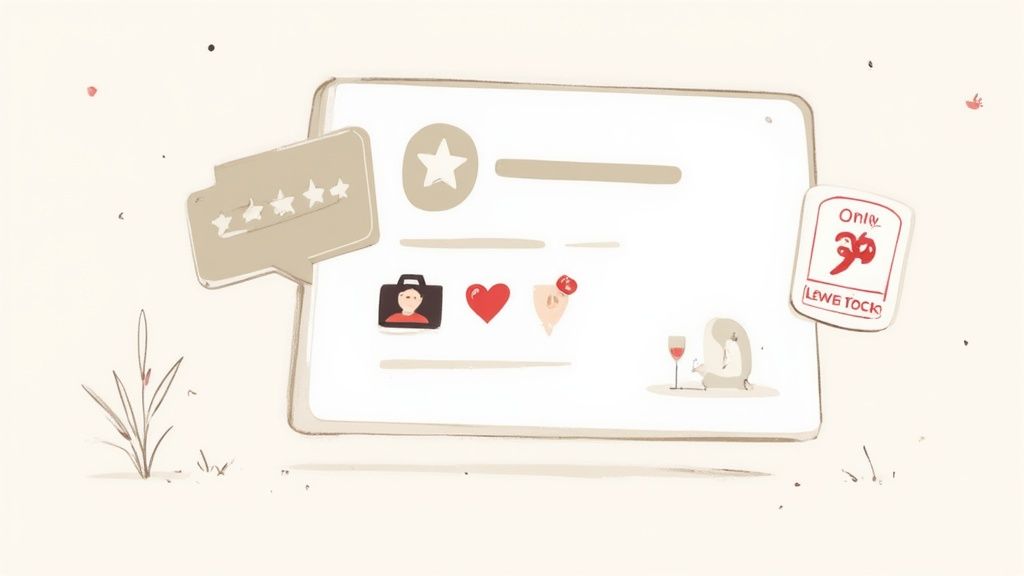
If the simple reminder is a gentle tap on the shoulder, the Social Proof & FOMO Email is the enthusiastic friend whispering, “Everyone loves this, and it’s about to sell out!” This email moves beyond a basic reminder by introducing powerful psychological triggers: social validation and scarcity. It reassures your customer that they made a great choice while creating a sense of urgency to complete the purchase.
By showcasing positive reviews, star ratings, or low stock alerts, you shift the customer’s mindset from “Do I want this?” to “I might miss out on something amazing.” This is one of the most effective abandoned cart email examples for converting hesitant shoppers into confident buyers. It validates their taste and gently pressures them to act before it’s too late.
Strategic Breakdown
Companies like Warby Parker and Sephora masterfully integrate social proof into their cart recovery flows. Their emails often feature snippets of glowing customer reviews or highlight the product’s average star rating directly beneath the item image. Similarly, retailers like Best Buy and Nike effectively use FOMO by adding “Low in Stock” or “Selling Fast” badges to abandoned items, signaling high demand and potential scarcity.
Key Insight: People trust other people more than they trust brands. By showcasing genuine reviews or indicating popularity, you borrow credibility from existing happy customers to persuade a new one. The combination of social proof (quality validation) and FOMO (scarcity) creates a compelling one-two punch that is difficult for shoppers to ignore.
Actionable Steps for Your Store
Here’s how to build a powerful social proof and FOMO email for your store:
- Time it Right: Send this email 24 hours after abandonment. It gives your customer time to consider, and the added social proof can be the final push they need.
- Showcase Your Best Reviews: Integrate a 5-star rating graphic or a short, impactful customer quote directly into the email template. Ensure it’s authentic and relevant to the abandoned product.
- Create Urgency with Scarcity: Use clear, honest language to indicate low inventory.
- Example: “Hurry! Only 3 left in stock.”
- Example: “Selling fast! Don’t miss out.”
- Example: “Your item is popular and might sell out.”
- Write a Compelling Subject Line: Spark curiosity and a fear of missing out.
- Example: “Your item is getting a lot of attention”
- Example: “Don’t miss out! Your cart is selling fast”
- Example: “See what others are saying about your item”
- Combine It with a Strong CTA: Your call-to-action should reinforce the urgency. Use phrases like “Claim My Item Now” or “Buy It Before It’s Gone”.
4. The Educational/Benefit-Focused Email
When your customer hesitates over a complex or high-ticket item, the barrier isn’t usually the price alone—it’s a lack of confidence in the product’s value. The Educational/Benefit-Focused Email tackles this head-on, shifting from a simple “buy now” message to a “here’s why this will change your life” approach. It’s designed to build trust and justify the investment by educating the customer on the product’s unique benefits, features, and problem-solving capabilities.
This email is perfect for products that require a bit more consideration, like advanced software, high-performance fitness equipment, or specialized skincare. Instead of just reminding them about the item in their cart, you’re giving them the final pieces of information they need to feel great about their decision. You’re turning a sales pitch into a valuable resource, reassuring them that their potential purchase is a smart one.
Strategic Breakdown
Companies like Peloton and Adobe excel at this strategy. They understand that customers buying a premium stationary bike or a creative software suite aren’t just buying a product; they’re investing in a new lifestyle or professional skill. Their abandoned cart emails often feature compelling video testimonials, clear infographics breaking down complex features, or stories of how existing customers achieved their goals. This content addresses unspoken objections and builds an emotional connection.
Key Insight: For considered purchases, the biggest obstacle is often purchase anxiety. This email’s goal is to eliminate that anxiety by arming your customer with knowledge and social proof, making them feel confident and excited about the value they’re about to receive.
Actionable Steps for Your Store
Here’s how you can build a powerful educational email for your store:
- Time it Strategically: Send this email 24-48 hours after abandonment. This gives your customer time to think and makes your follow-up feel like a helpful consultation rather than a rushed reminder.
- Highlight 3-5 Key Benefits: Don’t just list features. Frame them as direct solutions to your customer’s problems. Instead of “16GB of RAM,” say “Effortlessly edit 4K video without any lag.”
- Leverage Visual Education: Embed a short video that showcases the product in action. A quick demo, a customer testimonial, or an animated explainer can be far more persuasive than text alone.
- Write a Value-Driven Subject Line: Focus on the outcome, not just the cart.
- Example: “Here’s How the [Product Name] Works”
- Example: “Still thinking it over? See what you’re missing.”
- Example: “Unlock Your Potential with [Product Name]”
- Include Social Proof and FAQs: Add a top-rated customer review or a mini FAQ section addressing common concerns (e.g., “Is it easy to set up?”, “What’s the return policy?”). This preemptively answers their hesitations, a crucial step when you want to learn more about tips for selling clothes online.
5. The Multi-Step/Automated Sequence Email
While a single reminder can be powerful, the Multi-Step/Automated Sequence is where you build a true conversion engine. This isn’t just one email; it’s a strategic series of messages sent over several days, each with a unique angle and purpose. It’s designed to overcome different customer hesitations at just the right time, escalating from a gentle nudge to a compelling offer and, finally, a touch of urgency.
This approach acknowledges that not all your customers abandon their carts for the same reason. Some just need a reminder, others are price-sensitive, and many need a boost of confidence. By creating a sequence, you address each of these potential roadblocks methodically, maximizing your chances of winning back the sale without giving away a discount to someone who didn’t need one.
Strategic Breakdown
The beauty of a multi-step sequence lies in its escalating persuasion. The first email is a simple reminder. The second, sent a day later, might introduce a small discount to tackle price objections. The third could leverage social proof like reviews or best-seller tags to build trust. A final email might create urgency by mentioning low stock or an expiring offer.
This tiered approach respects the customer journey. You’re not hitting them with your best offer immediately; you’re building a conversation. This strategy allows you to learn more about your customers’ motivations while systematically breaking down the barriers to purchase, a key tactic in reducing cart abandonment. To dive deeper into this, explore some advanced strategies to reduce cart abandonment on your store.
Key Insight: A sequence allows you to test different psychological triggers. The first email tests the power of simple reminding. The second tests price sensitivity. The third tests the influence of social proof. By analyzing which email in the sequence gets the conversion, you gain valuable data about what truly motivates your shoppers.
Actionable Steps for Your Store
Here’s how you can implement a powerful automated sequence for your Shopify store:
- Map Your Sequence: Plan a 3-4 email series. A common, effective flow is:
- Email 1 (1 hour): Simple Reminder (“Did you forget something?”)
- Email 2 (24 hours): Introduce a small incentive (“Here’s 10% off to help you decide.”)
- Email 3 (48-72 hours): Build trust with social proof or create urgency (“Don’t miss out! Your items are selling fast.”)
- Vary Your Subject Lines and Content: Each email should feel fresh. Don’t just resend the same message. Change the subject line, the header image, and the core message to reflect the new angle (reminder vs. incentive vs. urgency).
- Keep the Series Short: Stick to 3-5 emails maximum. Anything more risks annoying your potential customer and can lead to higher unsubscribe rates.
- Monitor Performance at Each Step: Pay close attention to the open, click, and conversion rates for each email in the flow. If your second email (the incentive) has a massive conversion lift, you know your audience is price-sensitive. If the third email (urgency) performs best, you can lean into that tactic more often.
6. The Personalized & Dynamic Content Email
This is where your abandoned cart emails evolve from a simple reminder into a powerful, data-driven sales tool. The Personalized & Dynamic Content email goes far beyond just using a customer’s first name. It leverages their unique browsing history, past purchases, and real-time data to create an email that feels like a personal shopping session crafted just for them.
Sent in the later stages of a recovery sequence, perhaps 24-48 hours after abandonment, this email reignites interest by showcasing not just what was left behind, but what could be. By displaying complementary items, recently viewed products, or popular alternatives, you transform a forgotten cart into a new discovery opportunity. It’s like a skilled stylist saying, “I see you liked this jacket; have you considered these items that would complete the look?”
Strategic Breakdown
Masters of this strategy, like Amazon and Sephora, have built their empires on the back of hyper-personalization. Their abandoned cart emails are sophisticated engines that dynamically pull in product recommendations tailored to the individual. If you leave a camera in your cart, they’ll show you lenses, tripods, and memory cards. This anticipates the customer’s needs and significantly increases the average order value.
Key Insight: The goal here is to re-engage by demonstrating that you understand the customer’s tastes and needs. By showing them relevant, interesting products beyond their initial cart, you provide value and create a compelling reason to return, even if their initial intent has faded.
Actionable Steps for Your Store
Here’s how you can implement this advanced strategy for your Shopify store:
- Leverage Behavioral Data: Use an app or platform that tracks customer browsing behavior. This data is the fuel for your dynamic content blocks. For deeper insights, explore the landscape of eCommerce personalization tools that can integrate with your email service provider.
- Segment Your Recommendations: Don’t just show random “bestsellers.” Create smart segments.
- Example: If a user abandons a running shoe, show them performance socks, running shorts, and fitness trackers.
- Example: For a high-value item, recommend premium accessories or care products.
- Write an Intriguing, Data-Infused Subject Line: Use personalization to create curiosity.
- Example: “Still thinking about it? These might go perfectly.”
- Example: “We Picked These Just For You”
- Example: “Your Next Favorite [Product Category] Awaits”
- Design a Dynamic Layout: Your email template needs clearly defined sections for the abandoned item, a “You Might Also Like” block, and a “Recently Viewed” section. Ensure these blocks update in real-time to avoid showing out-of-stock products.
7. The Empathy & Objection Handling Email
The Empathy & Objection Handling Email moves beyond a simple reminder to address the why behind a customer’s hesitation. This strategic email acknowledges potential concerns head-on, such as shipping costs, sizing doubts, or product quality questions. It’s a proactive customer service touchpoint disguised as a marketing email, designed to build trust and dismantle purchase barriers.
Sent 24-48 hours after abandonment, this email gives the customer space and then re-engages them with reassurance. Instead of just saying, “You left this,” it says, “We understand you might have questions, and we’re here to help.” By showing empathy and providing solutions, you transform a moment of doubt into an opportunity to reinforce your brand’s value and commitment to customer satisfaction, making it one of the most effective abandoned cart email examples for thoughtful brands.
Strategic Breakdown
Companies like Warby Parker and Zappos are masters of this approach. Warby Parker anticipates the fear of buying glasses online by prominently featuring its “Home Try-On” program in recovery emails. Zappos neutralizes concerns about shoe fit and feel by constantly highlighting its legendary free shipping and 365-day return policy. They don’t just sell a product; they sell confidence in the purchase.
Key Insight: The most powerful way to overcome cart abandonment is to identify the biggest point of friction in your checkout process and address it directly. This email’s goal is to replace a customer’s uncertainty with a feeling of security and support.
Actionable Steps for Your Store
Here’s how you can replicate this trust-building strategy for your Shopify store:
- Identify Common Objections: Use customer surveys or analyze support tickets to find out why your shoppers hesitate. Is it shipping costs? Return policies? Sizing issues?
- Lead with the Solution: Make your key reassurance the star of the email. If free returns are your biggest strength, feature that benefit prominently near the top.
- Use Empathetic Subject Lines: Frame your subject lines around providing help and removing risk.
- Example: “Still Deciding? Let Us Help”
- Example: “No-Hassle Returns on Your [Product Name] Order”
- Example: “We Saw You Were Looking… Any Questions?”
- Provide Multiple Support Channels: Add links to your FAQ page, embed a size guide directly in the email, or include a clear link to your live chat or customer support email. Make it incredibly easy for customers to get the answers they need to feel confident enough to complete their purchase.
8. The Gamified & Interactive Email
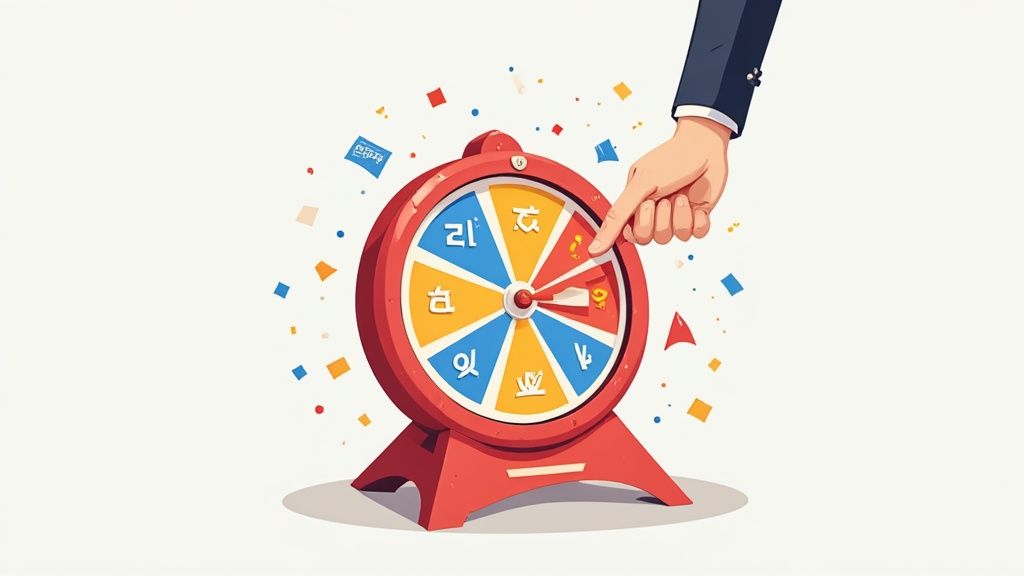
In a crowded inbox, sometimes the best way to stand out is to offer an experience, not just a message. The Gamified & Interactive Email transforms a simple reminder into a fun, engaging micro-experience for your customer. Instead of just showing them what they left behind, you invite them to play, discover, or win something, turning the passive act of reading an email into an active brand interaction.
This forward-thinking strategy uses elements like spin-to-win discount wheels, interactive quizzes, or even product configurators directly within the email. It works because it leverages human psychology: our love for games, our curiosity, and the thrill of earning a reward. By breaking the monotony of standard marketing emails, you create a memorable moment that can re-ignite purchase intent far more effectively than a static message alone.
Strategic Breakdown
Brands like Fashion Nova and Sephora are pioneers in this space, using gamification to make their abandoned cart emails feel less like a sales pitch and more like a gift. Fashion Nova’s “Spin to Win” wheel is a classic example, offering a variable discount that encourages a click-through just to see what prize you’ll get. It’s a brilliant way to introduce a discount without devaluing the product, as the customer feels they’ve “earned” it.
Key Insight: Gamification shifts the dynamic from “we want you to buy” to “we want you to win.” This small change in framing can dramatically increase engagement and click-through rates because it taps into a customer’s sense of fun and anticipation, making the path back to the cart feel like a reward in itself.
Actionable Steps for Your Store
Here’s how you can bring this innovative strategy to your Shopify store:
- Choose the Right Game: The game should match your brand. A “Spin to Win” wheel works great for fashion and accessories, while a “Beauty Profile Quiz” is perfect for cosmetics. The goal is simple, fast engagement.
- Offer an Irresistible Prize: The reward must be worth the interaction. Offer a compelling discount (e.g., 15-25% off), free shipping, or a small gift with purchase. The perceived value is key.
- Write Playful, Action-Oriented Subject Lines: Your subject line needs to hint at the fun inside without giving everything away.
- Example: “Feeling Lucky? A Special Offer is Waiting…”
- Example: “Spin to Reveal Your Mystery Discount!”
- Example: “Don’t Just Complete Your Order, Win It!”
- Ensure Mobile-First Design: Interactive elements must work flawlessly on mobile devices, where most emails are opened. Use technologies like AMP for Email for the best experience, but always include a static fallback version (e.g., a simple discount code) for email clients that don’t support interactivity.
Your Next Step: From Abandoned Carts to Loyal Customers
You’ve just walked through a gallery of powerful abandoned cart email examples, each a masterclass in turning hesitation into conversion. We’ve dissected everything from the simple, polite nudge to the FOMO-driven, social-proof-packed powerhouse. You now have the strategic blueprints to build a cart recovery engine that not only recaptures lost revenue but also strengthens customer relationships.
The most crucial takeaway is this: your abandoned cart emails are not just about a single sale; they are about understanding the ‘why’ behind the hesitation. Did your customer get distracted? Were they surprised by shipping costs? Or, were they simply unsure about the fit or style? The examples we’ve explored are all tools to address these underlying questions. Your goal is to move beyond a generic “You left something behind!” message and evolve into a helpful guide, gently leading your customer back to a confident purchase decision.
From Inspiration to Implementation
So, where do you begin? Don’t try to implement all these strategies at once. The path to mastery is iterative. Here are your actionable next steps to transform this inspiration into a revenue-generating asset for your Shopify store:
Start with a Foundation: If you have nothing in place, begin with a simple two-step sequence. Launch a “Simple Reminder” email that goes out within 1-3 hours of abandonment. Follow it up 24 hours later with an “Incentivized Offer,” like a 10% discount or free shipping. This foundational sequence is your safety net, catching a significant portion of would-be lost sales with minimal effort.
Analyze Your ‘Why’: Dig into your customer feedback, survey results, and product reviews. What are the most common reasons your customers hesitate? If you sell complex products, an “Educational/Benefit-Focused” email could be your most powerful tool. If you sell fashion, addressing fit and appearance is paramount. Use this insight to choose your next email strategy.
Inject Personality and Proof: Your brand’s voice should shine through. We saw how humor, empathy, and urgency can transform a mundane reminder into a memorable brand interaction. Once your foundational sequence is running, look to incorporate social proof. Add customer reviews, star ratings, or user-generated photos directly into your emails. Showcasing that others love the item in their cart is one of the most effective ways to dissolve doubt.
Building a Proactive Conversion Strategy
Ultimately, the best abandoned cart email strategy is part of a larger approach to the customer journey. While these emails are incredibly effective at reacting to an abandoned cart, you should also be thinking about how to prevent abandonment in the first place. This means building confidence and removing friction before a customer even considers leaving.
For many eCommerce stores, especially in fashion, that friction is uncertainty. Customers can’t try things on, so they hesitate. This is where you can be proactive. By integrating tools that help customers visualize products on themselves, you answer their biggest unasked question: “How will this actually look on me?” This preemptive confidence-building drastically reduces the likelihood of cart abandonment.
You are now equipped with the strategies and abandoned cart email examples to build a system that works tirelessly for your brand. Start small, test relentlessly, and always listen to your customers. Every recovered cart is more than just a sale; it’s a customer relationship saved.
Ready to reduce cart abandonment before it even happens? By helping shoppers visualize how clothes will fit on their unique body, Icona builds the purchase confidence needed to click “Buy Now” instead of closing the tab. Learn how our AI-powered virtual try-on can slash your abandonment rates and boost conversions at Icona.